Connection
in the age of "parasocial" everything

This essay was written as a part of a collaborative exercise with fellow writers in the Delhi NCR Substack group. Links to their essays are at the end of the article.
The word of the year, apparently, is parasocial. Another jointed little term to describe the one-sided relationships we now build with people we don’t actually know- creators, influencers, strangers with spotless living rooms and hollow opinions on everything.
It’s funny, this illusion of intimacy in the times we are living in. Where the word of the year quietly admits how we are watching people live, not living with them.
Parasocial reflects more than a cultural trend; it exposes the kind of connections we’ve been practising lately. We know a thousand people in the loosest sense of knowing. We see their new jobs, new babies, new heartbreaks, their carefully curated celebrations and “photo dump” captions.
And because we’ve seen it, we feel an odd responsibility to reciprocate the exchange of information.
It’s a strange pressure, this quiet obligation to keep feeding the machine so we don’t disappear from the collective awareness of people who may or may not even remember what our real voice sounds like.
But I don’t think this is how humans were meant to connect. We weren’t designed to hold the emotional complexity of a thousand storylines in our heads at the same time. The faces we eat with, cry with, work with, lean on. The handful who shape us and stay with us.
In fact, there is a theory proposed by anthropologist Robin Dunbar that suggests that the size of our neocortex limits the number of meaningful social connections we can manage at any one time, and estimates it to be around 150.
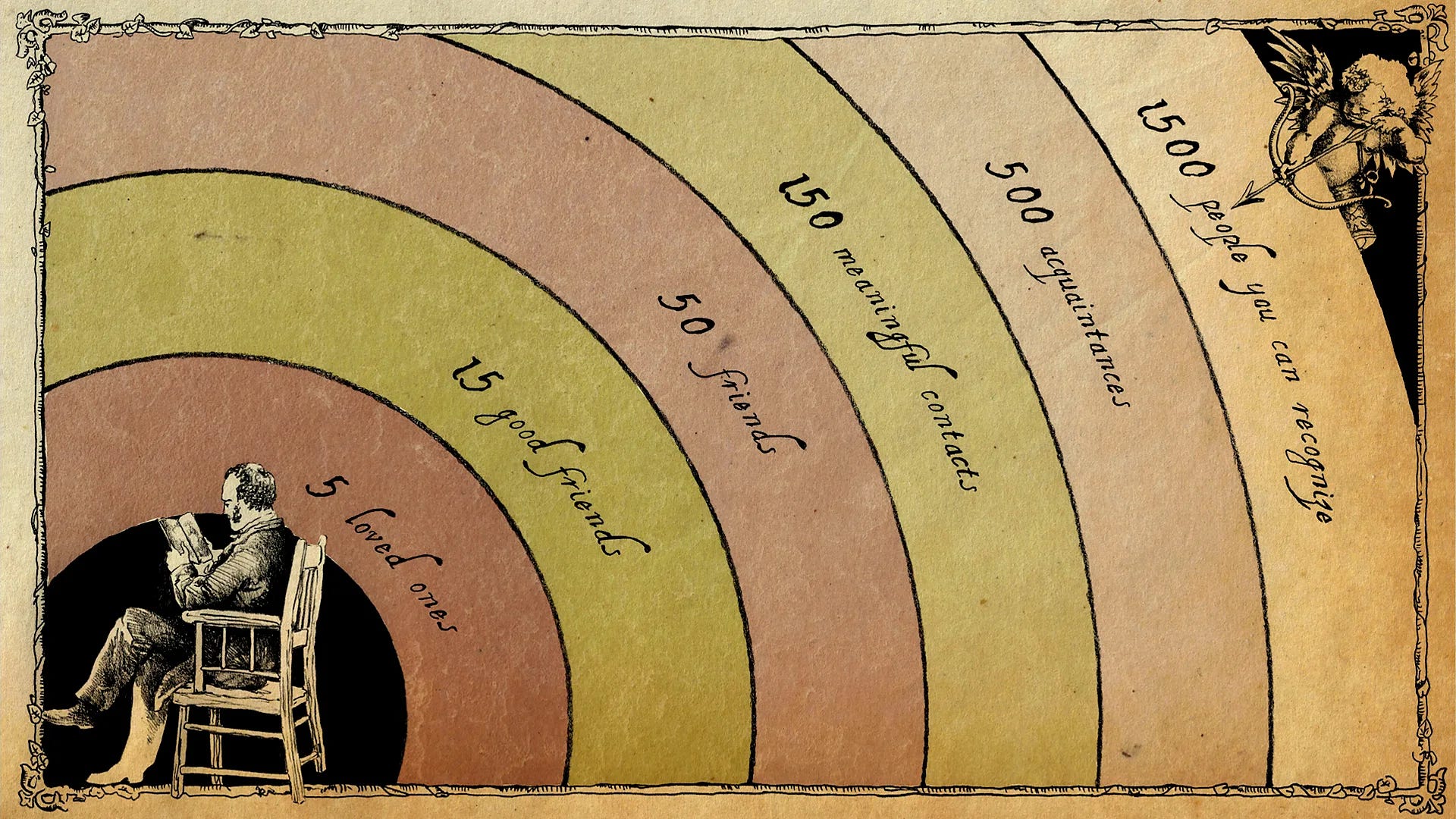
Maybe that’s why, even though we’re “connected to” or “friends with” hundreds, sometimes thousands, we barely feel any true connection. And if we’re honest, we don’t give much either. Not because we’re incapable, but because there is simply no space left.
And I catch myself feeling this often lately. The more I am on social media, the more I try to care for everyone, and the more I realise I’m only offering fragments of myself, never the kind of presence that actually counts.
It feels like we’ve collectively forgotten how connection is really done. How it feels when it isn’t mediated through screens or story updates or algorithms that want us to perform our lives to each other instead of really living them together.
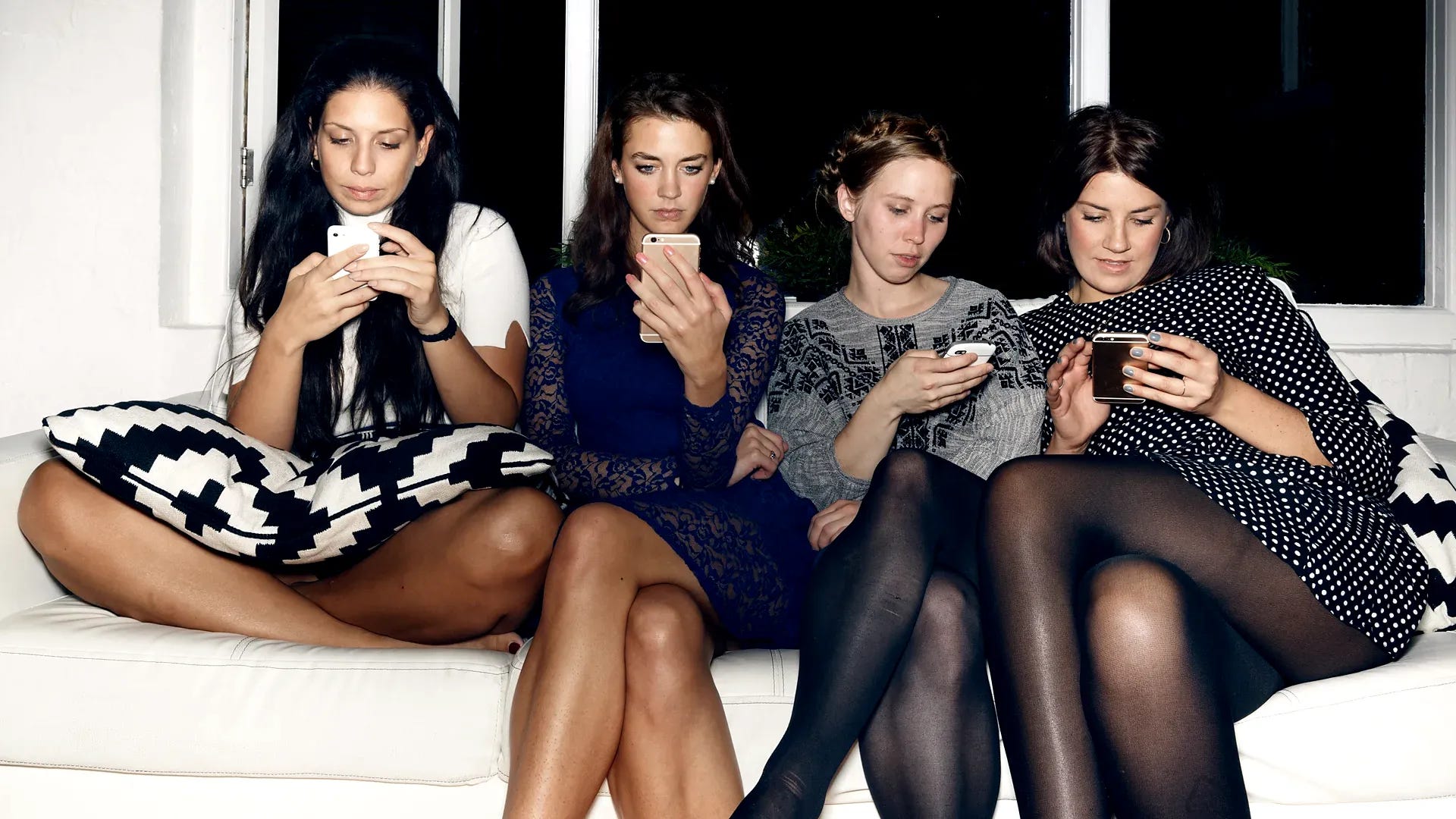
And speaking of algorithms, I honestly think that’s what’s wearing us down. This constant nudging to think of ourselves as brands is just inadvertently feeding into a not-so-apparent pressure we all share to constantly maintain an online presence.
If I was the one coining the term of the year it would be called Connection fatigue. And, I would define it as the exhaustion of performing closeness without any of its depth or truth, or safety.
The tiredness that comes from constantly witnessing others, constantly being witnessed. A kind of emotional burnout from carrying the stories of people who aren’t really ours, while neglecting the ones who are.
Because, how else do I describe how even while being surrounded by all the casual, compulsive check-ins and comments, a longing still remains. A hunger for the kind of connection that doesn’t need subtexts. The kind where feelings can unfold; where we carry a little of each other’s lives with us, and not just on our screens.
Maybe what we’re feeling isn’t the death of connection but the ache for its return. Or maybe it’s the grief of misplacing it.
And maybe the way back from this parasocial everything simply lies in slowness. Slower friendships, slower conversations, slower witnessing.
Letting people arrive in our lives at the pace a real connection demands. And with that, letting ourselves arrive, too.
I’ve been putting these words down, not knowing who they might find. That they’ve found you feels like a quiet kind of luck. Thank you for reading.
Between diaper changes and half-done drafts, I write about love and the ways it shapes us. Coffee helps me make it to both.
If you enjoyed reading, you can fuel my next piece with a cup:
Other essays from fellow writers
Story of Delhi NCR Substack group by Abhishek Singh
When strangers feel like friends by Mansi Goel
Where guidance felt like grace by Parul Kapoor
Cuts, scrapes, and a theory of personhood by Shubha
This is one rare thing people know about, but do not talk about. And you have done explaining it very clearly.
I wonder why everyone cannot see this parasocial thing, but I learned something new from your article, even though I thought I knew some of the stuff
Connection fatigue is the most apt word for so much of what I have been feeling about social media lately. Your post me introspect about my complicated relationship with social media and how I would like to handle it in the coming time